Madagascar Snakes:
Complete Guide to Species, Habitat & Herping
A comprehensive exploration of Madagascar’s unique snakes.
Madagascar snakes are among the most fascinating reptiles on Earth, yet one group of animals rarely gets the attention it deserves: the snakes of Madagascar. While Madagascar is famous worldwide for its lemurs and chameleons, its serpentine fauna is equally extraordinary. For reptile enthusiasts and wildlife photographers, the island is an exceptional destination. It shelters a remarkable diversity of snakes in Madagascar, many of them endemic and found nowhere else on the planet.
What makes searching for a Madagascar snake so exciting is that they rarely make it easy. Some species live high in the canopy, others move through the leaf litter, and some are camouflaged so well that they can rest just a few metres away without ever being noticed.
As a licensed national wildlife guide, I spend a great deal of my time in Madagascar’s forests searching for reptiles, amphibians and other unique fauna. For me, herping was never about ticking species off a list. It’s about reading the habitat, moving slowly, watching closely, and giving the forest enough time to reveal what it’s hiding.
This guide walks you through every Madagascar snake species, their habitats, the best places to find them, and practical advice for planning a dedicated herping expedition.

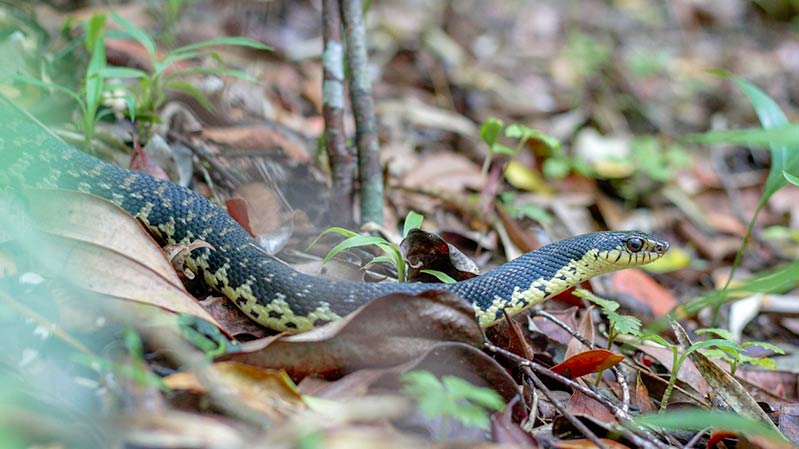
How Many Madagascar Snake Species Live on the Island?
Estimates put Madagascar’s snake fauna at more than 80 described species, and the number keeps climbing as fieldwork and genetic analysis continue. What sets the island apart isn’t just the count but how much of it exists nowhere else: the great majority of these species are strictly endemic, a level of exclusivity that puts Madagascar among the top destinations anywhere for madagascar snake species found on a single landmass.
This isolation is exactly why herpetologists treat the island as such a priority. Tens of millions of years cut off from continental Africa let separate evolutionary lineages develop largely on their own, producing forms found nowhere else on Earth.
The species count is also a moving target. New species are still being formally described, and genetic work continues to split populations once lumped together as a single species — a pattern you’ll see repeatedly throughout this guide, including among the boas themselves.
The snakes of Madagascar occupy a wide variety of ecosystems. Some species are primarily terrestrial, spending much of their lives on the forest floor. Others are highly arboreal, inhabiting branches and foliage. There are also species uniquely adapted to dry deciduous forests, humid rainforests and regions with harsh seasonal vegetation.
Consequently, looking for snakes in Madagascar can be a completely different experience depending on where you travel. A rainforest expedition in the east offers a stark contrast to exploring the arid forests of western Madagascar or the pristine northern rainforests around Marojejy.
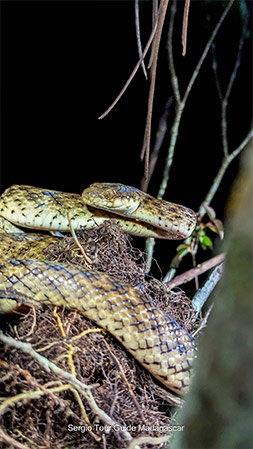
Major Snake Families and Species of Madagascar
The snake fauna of Madagascar is particularly fascinating because several entire groups are endemic to the island. Among the most impressive are the Malagasy boas, alongside smaller, highly specialised species adapted to life in the dense vegetation.
Madagascar Boas: Acrantophis and Sanzinia
Madagascar is home to remarkable constricting snakes belonging to the genera Acrantophis and Sanzinia. These boas are among the largest and most iconic madagascar snake representatives. Unlike venomous species, boas capture their prey using their powerful bodies and constriction.
Madagascar Ground Boa — Acrantophis madagascariensis
The Madagascar ground boa (Acrantophis madagascariensis) is one of the largest snakes found on the island. As its name suggests, it is mainly terrestrial. It occurs across various habitats and spends much of its time moving through ground cover or resting in sheltered microhabitats.
Despite its impressive size, spotting one in the wild is not always easy. A large snake can blend effortlessly into dense leaf litter and fallen logs. For a wildlife guide, locating a ground boa is not simply a matter of knowing the species; it requires reading the terrain and identifying ideal resting spots.
Madagascar Tree Boa — Sanzinia madagascariensis
The Madagascar tree boa (Sanzinia madagascariensis) is one of the most striking snakes to encounter during a rainforest expedition. It is strongly associated with arboreal vegetation, often spending extended periods in trees and low shrubs. Its western and northwestern relative, once treated as a subspecies, was reclassified as a full species — Sanzinia volontany — in 2014, so the two are now considered separate rather than two forms of the same animal.
Its colouration varies significantly, with individuals displaying beautiful combinations of green, brown and subtle iridescent tones. For photographers, a tree boa draped naturally over a mossy branch makes an exceptional subject.
The main challenge is spotting the snake in the first place. When searching the forest, I always recommend scanning the vegetation slowly at eye level and above, rather than focusing solely on the ground. A snake may be resting just above your head while remaining completely invisible to an untrained eye.
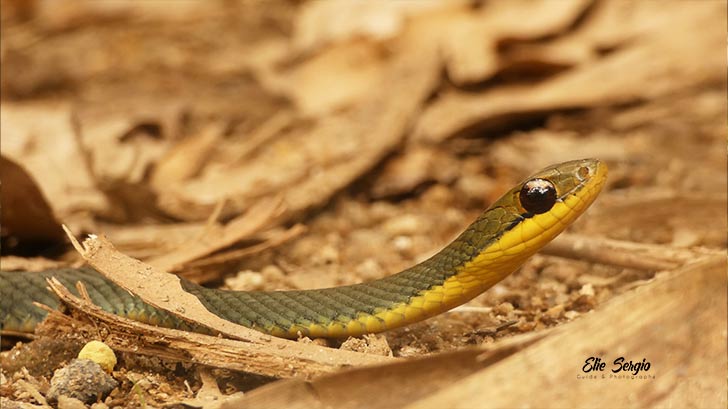
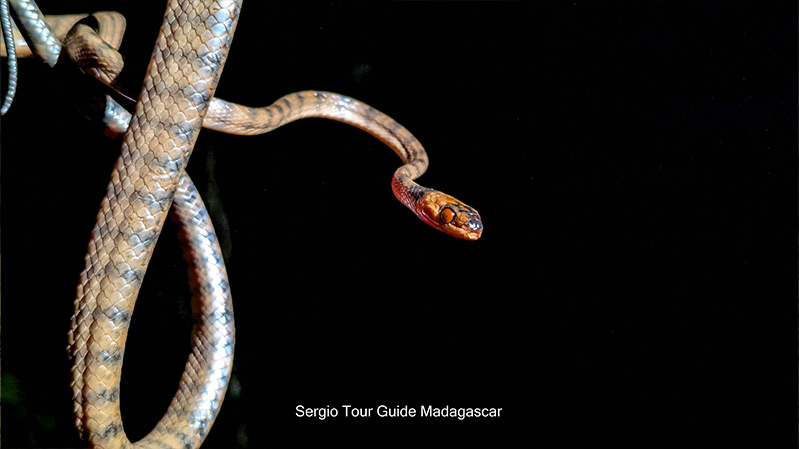
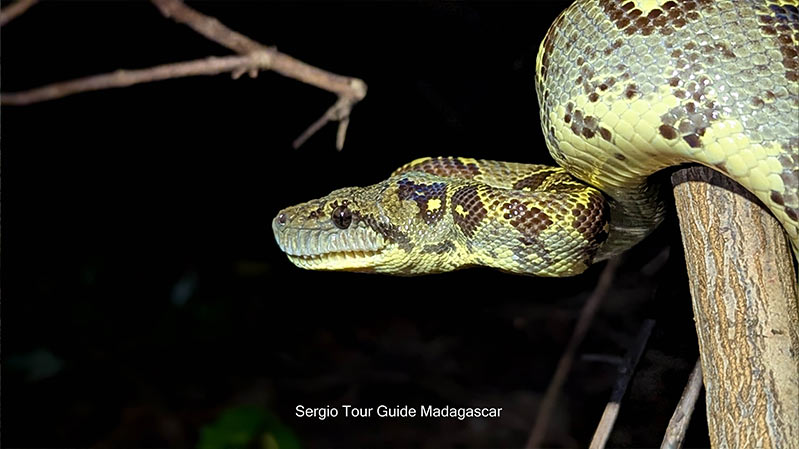
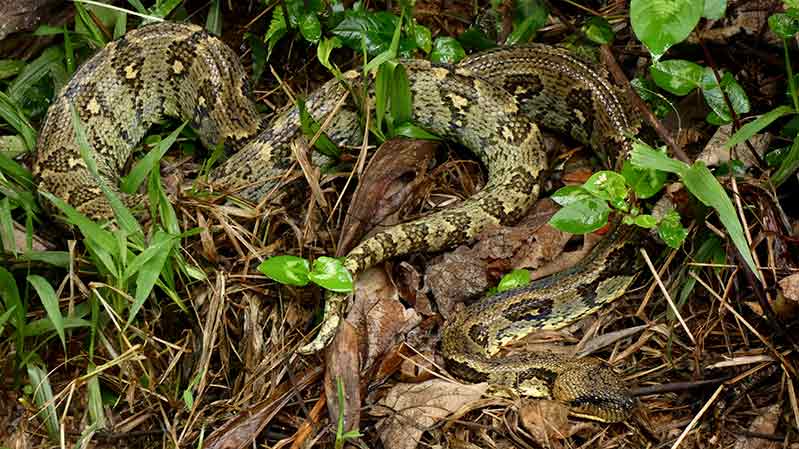
Madagascar hosts a remarkable diversity of snake species,
with many found nowhere else in the world. Among them, Leioheterodon madagascariensis, also known as the Madagascar hog-nosed snake, stands out for its unique digging behaviour and ecological role. This ground-dwelling snake has an upturned snout, a physical adaptation that allows it to burrow through sandy soil in search of prey. Its diet includes amphibians, insects, and small mammals, making it an effective pest controller in its habitat. Found in dry forests, grasslands, and agricultural areas, this non-venomous snake plays a significant role in aerating the soil and maintaining ecological balance. While it is generally docile, it may bluff by hissing or flattening its body when threatened, displaying a fascinating defence mechanism.
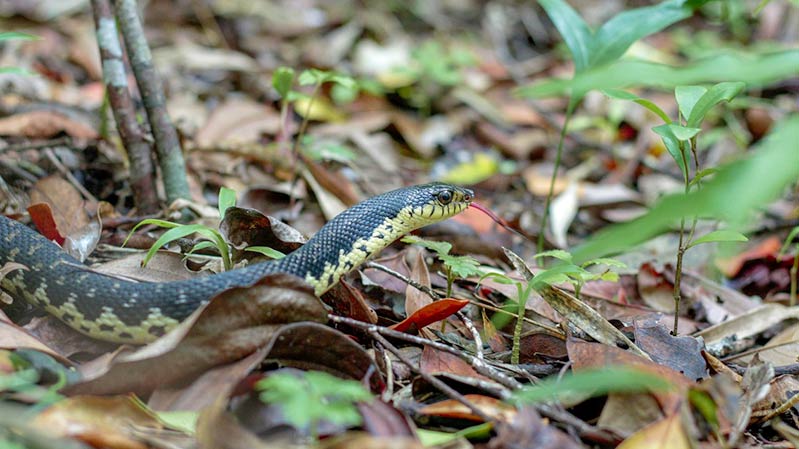
Leioheterodon madagascariensis
The Resourceful Madagascar Hog-Nosed Snake.
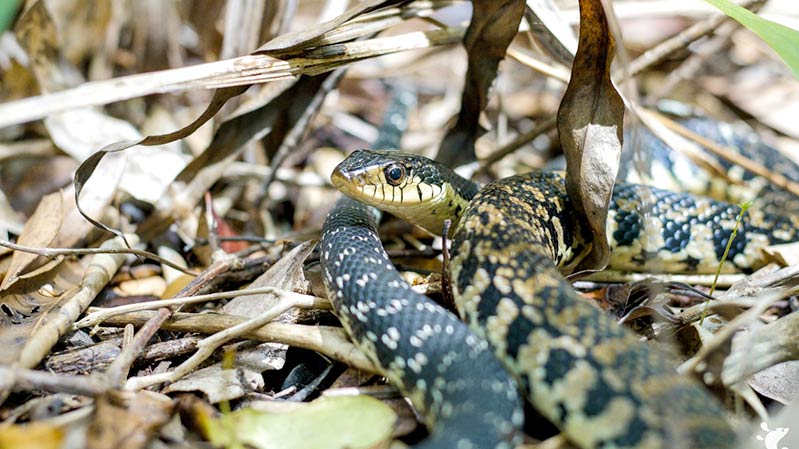
Leioheterodon madagascariensis
The Resourceful Madagascar Hog-Nosed Snake
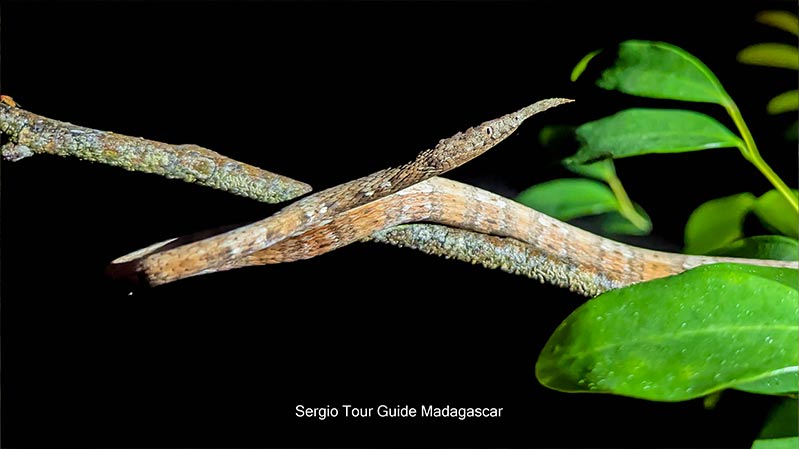
Langaha madagascariensis
The Enigmatic Leaf-Nosed Snake of Madagascar.
Madagascar leaf nosed snake,
Another striking species is Langaha madagascariensis, commonly known as the leaf-nosed snake. This arboreal reptile is renowned for its extraordinary snout, which resembles a leaf or twig. The shape and texture of the snout differ between males and females, with males typically having a rougher, more pronounced projection. This snake’s adaptation provides exceptional camouflage, blending perfectly with the branches and leaves of its forested habitat. Langaha madagascariensis is a slow-moving predator that primarily feeds on lizards, using its excellent concealment skills to ambush prey. Its mysterious appearance and behaviours make it a fascinating subject of study for herpetologists and wildlife enthusiasts alike.
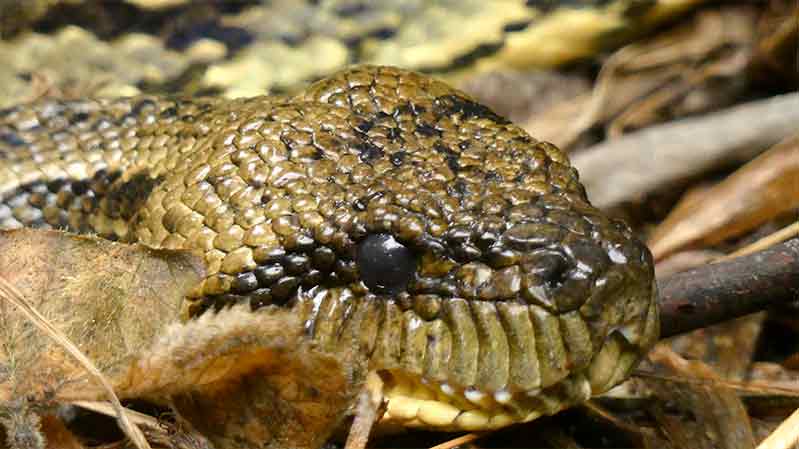
The Boa acrantophis,
or Madagascar ground boa, is one of the island’s largest snakes, growing up to three metres in length. This powerful constrictor is a master of ambush hunting, using its robust body to coil around and subdue prey such as small mammals, birds, and reptiles. Preferring humid environments like rainforests and mangroves, the ground boa often relies on its exceptional camouflage to avoid detection by predators and prey alike. Despite its formidable hunting skills, this species faces significant threats from habitat destruction and the illegal pet trade, making conservation efforts essential for its survival. Its slow reproduction rate adds to the challenges in maintaining stable populations.
Boa acrantophis
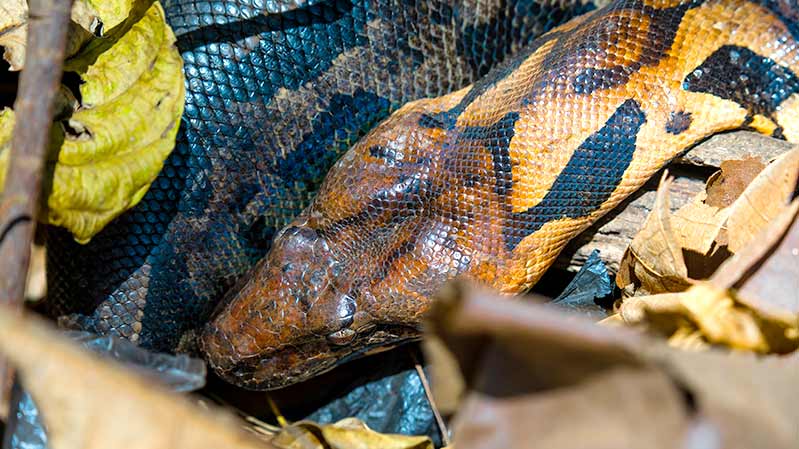
The Boa Sanzinia,
also known as the Malagasy tree boa or Sanzinia madagascariensis, is another impressive constrictor native to Madagascar. Unlike the ground boa, this species is arboreal and thrives in rainforests near water sources. Sanzinia madagascariensis displays remarkable colour variations, with individuals ranging from green to brownish hues, providing effective camouflage among tree branches. Its diet primarily consists of birds, bats, and small mammals, which it captures by hanging from branches and striking with precision. The tree boa plays a crucial role in controlling prey populations within its ecosystem, but it too faces threats from deforestation and human encroachment. Conservation programmes and ecotourism initiatives are vital to protecting this unique snake and preserving its habitat for future generations.